
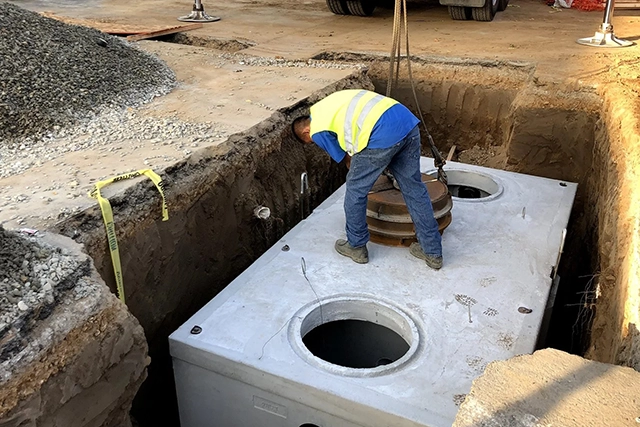

Grease in a drain line may start as a small issue, then turn into slow sinks, bad smells, backups, and costly cleanup. SepTech LBK provides grease trap installation in South Plains & Surrounding West Texas Areas, for homes, commercial kitchens, and new construction projects. Our certified crew studies your kitchen use, plumbing layout, available space, and discharge needs before recommending equipment. You get a practical setup made for the amount of grease your property produces, with clear answers before work begins.
Our grease trap installation services in South Plains & Surrounding West Texas Areas, support restaurants, cafes, churches, event spaces, rental properties, and outdoor kitchens. We can also coordinate excavation, trenching, concrete access, and sewer connections when the job calls for them.
A grease trap or interceptor slows wastewater long enough for fats, oils, and grease to separate. Grease rises, food solids settle, and the remaining water continues toward the sewer or approved wastewater system. When the unit has the right capacity and flow rate, it helps reduce grease buildup inside downstream piping.
Correct sizing matters because an undersized unit can fill quickly and pass grease downstream. We review fixture flow, meal volume, menu type, operating hours, pipe routing, and pump-out access. Shallowater follows the 2024 International Plumbing Code, so the plan must fit the property and local review.
Our grease trap installation in South Plains & Surrounding West Texas Areas cover three common project types:
Standard homes usually do not need a grease interceptor. A separate cooking building, outdoor kitchen, rental setup, or on-site wastewater concern may change that. We inspect the planned use and explain whether an indoor trap or outdoor interceptor makes sense. No guesswork, no oversized box in the wrong spot.
Restaurants and food preparation sites create grease-laden wastewater daily. Pot sinks, pre-rinse sinks, floor sinks, kettles, and approved fixtures may need an interceptor. We plan routing, venting, flow control, cleanouts, and service access around your kitchen layout, making future pumping easier.
New construction lets us plan before concrete, paving, and kitchen equipment fix the layout. We review the plumbing design, utility route, kitchen volume, pumping access, lid placement, and traffic loads. Sorting these details early saves a real headache later.
Every project starts with a site review. We trace the grease-producing drains, building sewer, available space, and surfaces affected by excavation. For grease trap installation in South Plains & Surrounding West Texas Areas, we also check whether the location supports inspection, cleaning, and pumping after startup.
Indoor hydromechanical traps usually sit near selected fixtures and depend on controlled flow. Larger gravity interceptors often sit outside and hold more wastewater. We choose the type after checking demand. Food grinders, dishwashers, and similar equipment need separate review because they can change the piping plan.
Permit and inspection needs depend on the property and scope. Shallowater lists residential and commercial building permits and directs other permit questions to City Hall. We help identify the required project information and follow the approved plan.
Hot grease cools inside pipes, coats drain walls, catches food particles, and narrows the line. A properly planned interceptor collects grease before it reaches harder-to-access piping and makes routine removal more controlled.
Grease control matters on septic properties too. Fats, oils, and grease can interfere with the tank and drain field, leading to extra pumping or repairs. SepTech LBK can review the grease unit alongside the sewer or septic route during new construction, helping prevent poor access and awkward excavation later.
Daily habits affect performance. Scrape plates into the trash, use sink strainers, collect fryer oil separately, and keep grease out of drains. Pump the interceptor before grease and solids take up too much working space. The schedule should reflect kitchen volume, unit size, inspection findings, and local requirements.
We organize equipment, control the work zone, and clear loose debris, helping your property remain usable and easier to manage during installation.
Our grease trap installation services in South Plains & Surrounding West Texas Areas include a clear project outline, helping you review equipment, labor, access, and restoration before approval.
Our 24/7 availability lets you report urgent site concerns quickly, reducing delays around active kitchens, inspections, or firm construction deadlines.
The price depends on unit type, capacity, pipe distance, excavation depth, access, permits, and surface repair. An indoor trap usually needs less digging than a buried interceptor. SepTech LBK checks the fixtures and route before giving a site-based estimate.
Sizing depends on connected fixtures, flow rate, kitchen output, menu, operating hours, and local approval. Sink width alone does not determine capacity. We calculate expected flow, match an approved unit, and confirm access for cleaning and inspection.
Food service properties that discharge grease-laden wastewater commonly need an approved interceptor or grease removal device. Requirements depend on fixtures, kitchen operation, plumbing code, and local review. A site check identifies which sinks and equipment must connect before work begins.
Straightforward on-site work often takes one to three working days after approvals, utility markings, and equipment delivery. Deep excavation, concrete cutting, traffic-rated covers, or long pipe runs can add time. We explain the sequence before the start date.
Many commercial units need monthly checks and pumping every one to three months, but usage sets the real schedule. Pump sooner when grease and settled solids use about one-quarter of the working depth, or when local rules require it.
SepTech LBK handles grease trap installation in South Plains & Surrounding West Texas Areas, for planned homes, commercial kitchens, and new building sites. We can coordinate trenching, sewer routing, dirt work, and concrete access. Call (806) 319-4820 before the kitchen and exterior surfaces are completed.
We support property projects with septic work, utility connections, excavation, concrete, road building, and reliable site preparation throughout South Plains and surrounding areas across West Texas.