A shiny new water line should mean strong, steady flow. Yet many homeowners turn on the tap after a fresh hookup and get a weak trickle instead of the stream they expect. Low pressure can spoil showers, slow dishwashers, and make lawn sprinklers sputter. The good news is that most pressure problems have simple causes you can find with basic checks and tools already in your toolbox. This blog walks you through clear, step-by-step fixes. Each section keeps words short, sentences tight, and ideas easy to follow. You will see what to look for, why it matters, and how to put things right without confusing terms. Let’s get your water moving the way it should.
Confirm Your Main Valve Is Fully Open
Even pros can leave the curb or indoor shut-off halfway closed after finishing work. A partly closed valve limits flow like a thumb on a hose.
Things to do
- Find the house valve near the meter or where the line enters.
- Turn the handle or lever until it stops. A gate valve handle should be all the way left. A ball-valve lever should sit in line with the pipe.
- Repeat at the street box if your area gives owners access.
Why it works
A full-open valve gives water its widest path. Most home pipes need at least 7 gallons per minute (gpm) for normal use. A half-open gate can cut that in half. After opening, run the highest faucet for one minute to clear air pockets that can also slow flow.
Technical note
If your home has a pressure regulator, opening the valve will not raise pressure above the regulator’s set point (usually 50–60 pounds per square inch, or psi). It only allows full volume to reach the regulator.
Clear Aerators And Showerheads Of Loose Debris
New connections stir rust, sand, and pipe sealant. Tiny bits can lodge in screens and holes meant to shape flow.
Steps to follow
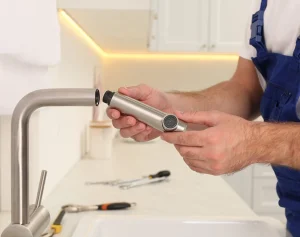
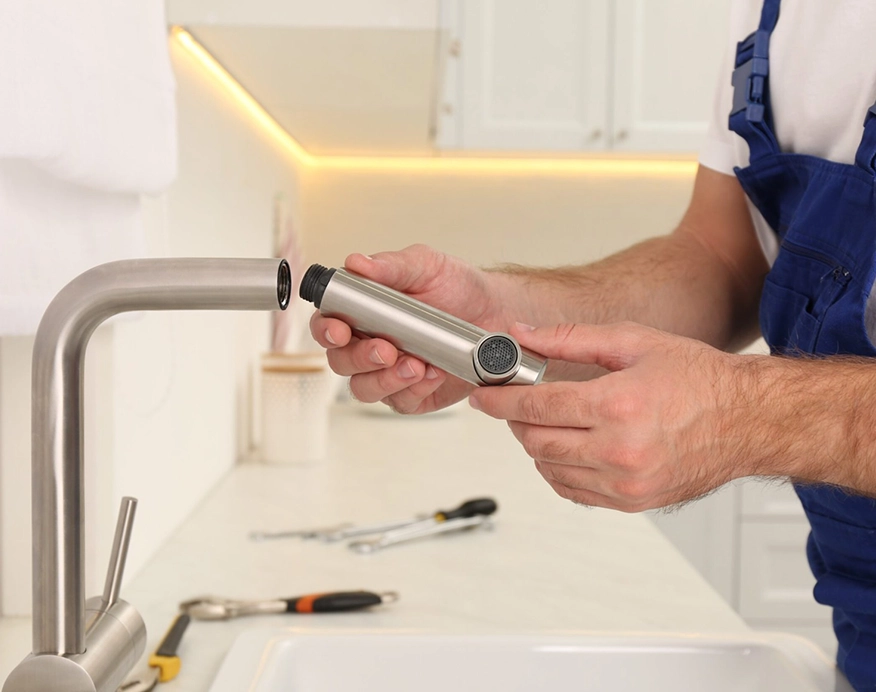
- Unscrew faucet aerators and showerheads.
- Soak parts in white vinegar for 30 minutes to dissolve mineral grit.
- Rinse, then brush the mesh with an old toothbrush.
- Before reinstalling, open the faucet for ten seconds to flush the empty spout.
Signs you hit the target
- A faucet that once dripped now fills a cup in four seconds or less (about 2 gpm).
- Shower spray feels strong and even, not thin and spiky.
Technical note
Most bathroom aerators have openings of 0.8 millimeters. A grain of sand can block that space. Clearing screens often raises pressure by 10 psi or more at the tip without touching the main line.
Check And Adjust The Pressure Regulator Setting
A pressure-reducing valve (PRV) protects your pipes from high street pressure but can sit too low for modern fixtures.
How to inspect
- Find the bell-shaped PRV on the main line after the shut-off.
- Attach a simple $10 pressure gauge to the laundry-room hose bib.
- Open the bib and read the dial.
Adjustment guide
- Loosen the PRV lock nut.
- Turn the screw clockwise to raise pressure, one quarter turn at a time.
- Re-check with the gauge. Stop at 60 psi for most homes.
Important facts
- Code often caps indoor pressure at 80 psi to prevent leaks.
- Some dishwashers need 20 psi minimum; rain-shower heads feel best near 55 psi.
- If adjustment does nothing, the PRV spring or diaphragm may be worn and needs replacement.
Flush The Line To Remove Construction Sediment
Work crews sometimes forget to flush before leaving. Grit inside pipes builds mini-dams that steal flow.
Fast flush method
- Shut off water to inside fixtures.
- Open the outdoor hose bib closest to where the line enters.
- Let water run full blast for five minutes or until clear.
- Do the same at the far end of the home to sweep branch lines.
Extra tip
Hold a white bucket under the bib for the first minute. If you see sand or rust flakes, keep flushing until water is clean.
Technical note
A one-inch line at 50 psi can move roughly 23 gpm. That speed picks up and carries away heavy grit. Skipping this step leaves debris to settle in elbows and valves, cutting pressure over time.
Inspect Pipes And Fittings For Hidden Leaks
Even a pinhole wastes flow and drops pressure across the system.
Clues to watch
- Meter dial spins when all taps are closed.
- Damp spots on walls or soil above the buried line.
- Hissing sound near joints.
Testing trick
- Record the meter reading.
- Wait 30 minutes with no water use.
- If numbers change, you have a leak.
Repair notes
- Tighten loose compression nuts by hand plus one-quarter wrench turn.
- Replace cracked PVC sections with slip couplings.
- For copper pinholes, a push-fit repair coupling works without solder.
Pressure math
A 1/16-inch leak at 60 psi can waste 300 gallons daily and shave several psi off household pressure.
Verify Pipe Size Matches Your Household Needs
Some new connections use small transition tubes that restrict flow.
Sizing basics
- 3/4-inch copper or PEX is standard for the main run up to 2,000 square-foot homes.
- Long houses or high-use homes often need 1-inch pipe from the meter to the water heater.
- Branch lines to bathrooms can step down to 1/2-inch.
Simple check
Measure the pipe outer diameter with a ruler. Copper 3/4-inch pipe measures about 7/8-inch across.
Upgrade cues
- Two fixtures running together go weak.
- Pressure drops more than 5 psi between the meter and indoor gauge.
Technical note
Water speed should stay near 8 feet per second to avoid noise and wear. Undersized pipe forces higher speed, raising friction losses that feel like low pressure at fixtures.
Call Experts When Simple Fixes Do Not Help
Some problems lie beyond easy reach, such as crushed service lines or city-side issues.
When to phone a pro
- Pressure below 40 psi after all checks.
- Visible pipe damage in concrete slabs.
- PRV or main line older than 15 years.
What to expect
Licensed plumbers use ultrasonic listening tools, pressure-loggers, and pipe cameras. They can pinpoint hidden breaks, replace faulty regulators, or lobby the utility for city-main adjustments.
Budget tip
Get at least two quotes. Many firms offset costs when you allow them to pull the city permit, saving time and extra trips.
Conclusion
Strong water pressure makes daily chores quick and pleasant. By opening valves, clearing screens, setting the regulator right, flushing grit, sealing leaks, and checking pipe size, you can solve most pressure troubles without stress. If those steps fall short, skilled help is only a call away. SepTech LBK is ready to test, repair, or upgrade your water or sewer connection so every tap in your home works the way you expect. Count on our team to bring steady flow back to your sinks, showers, and garden hoses.